
Collection and Family-Coherence Audits
A collection can tolerate visible differences without losing its identity. The review decision is whether each difference has a defined role or remains unexplained.
Resemblance alone cannot settle that question. A family-coherence audit compares observable cues under controlled conditions, then checks the brief, reference record, variant relationship, and approval history. It determines whether an outlier is intentional, explainable, and controlled.
This is not a vote on taste. It is a documented decision about what belongs together, what may vary, and what still requires confirmation.
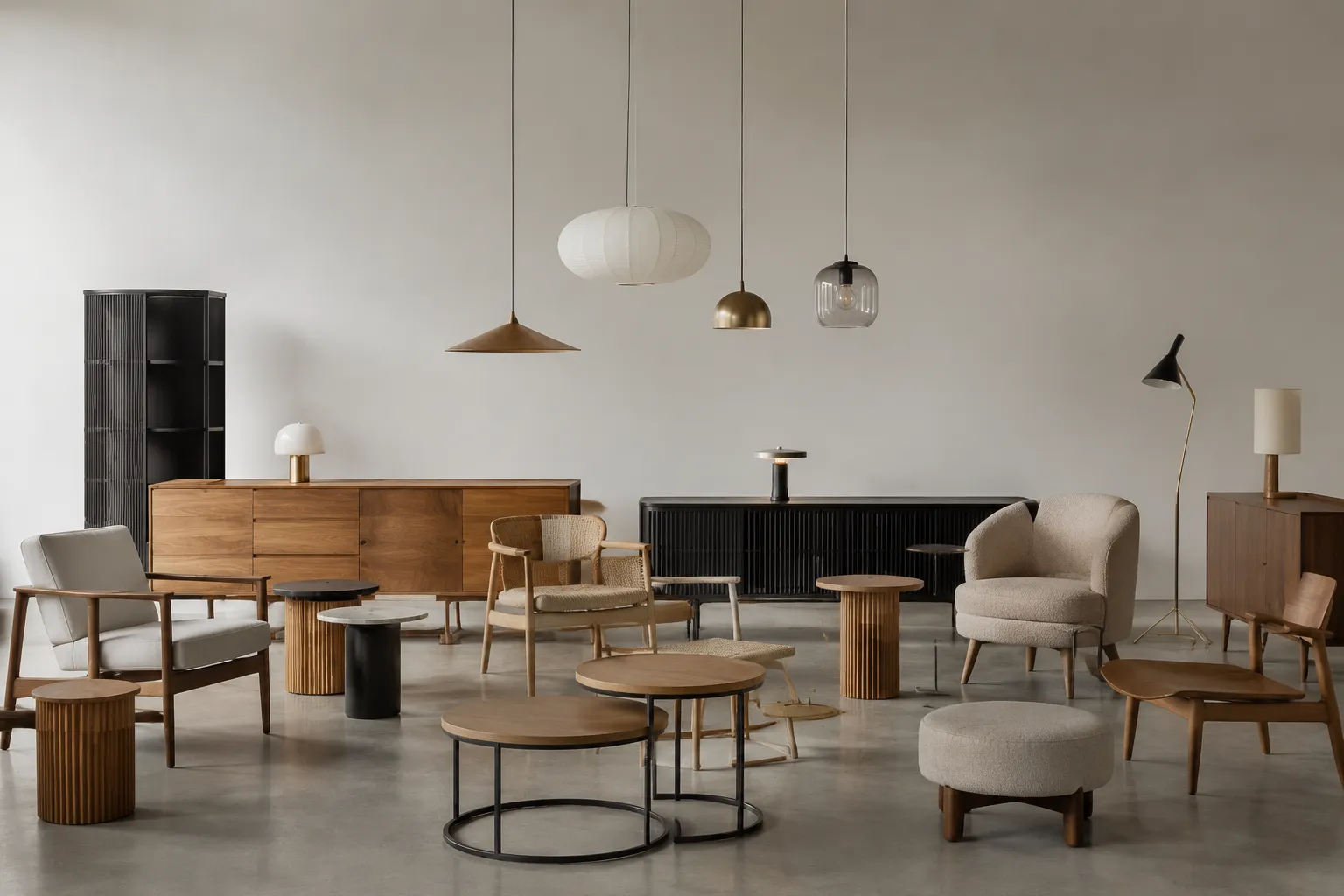
More specific pages
These pages continue the topic in smaller, more specific directions.
What a Family-Coherence Audit Can Establish
A furniture collection design audit examines relationships among products rather than judging each object in isolation. It separates four evidence classes:
- What the brief specifies as shared or variable
- What the render visibly shows
- What an approved reference or collection record identifies
- What remains inferred, undocumented, or technically unresolved
The render may show form, proportion, silhouette, component placement, finish appearance, and relative scale cues. It cannot establish hidden construction, shared component data, structural or electrical performance, production tolerances, installation requirements, or material behavior.
Keep those evidence classes separate. Image realism may strengthen a visual comparison, but it does not expand what the image can verify.
Start With the Collection Rule
Before comparing products, identify the proposed family rule. Without one, reviewers may treat personal expectations as design criteria.
The rule need not make every object look alike. It should identify which characteristics persist and which may change.
- A recurring relationship between vertical supports and horizontal planes
- A shared edge profile across wood or metal components
- A consistent treatment of joints, contact points, or transitions
- A controlled range of finish variants
- Repeated geometry in handles, shades, frames, or bases
- Comparable visual weight across different product sizes
- Defined exceptions for category, function, or room context
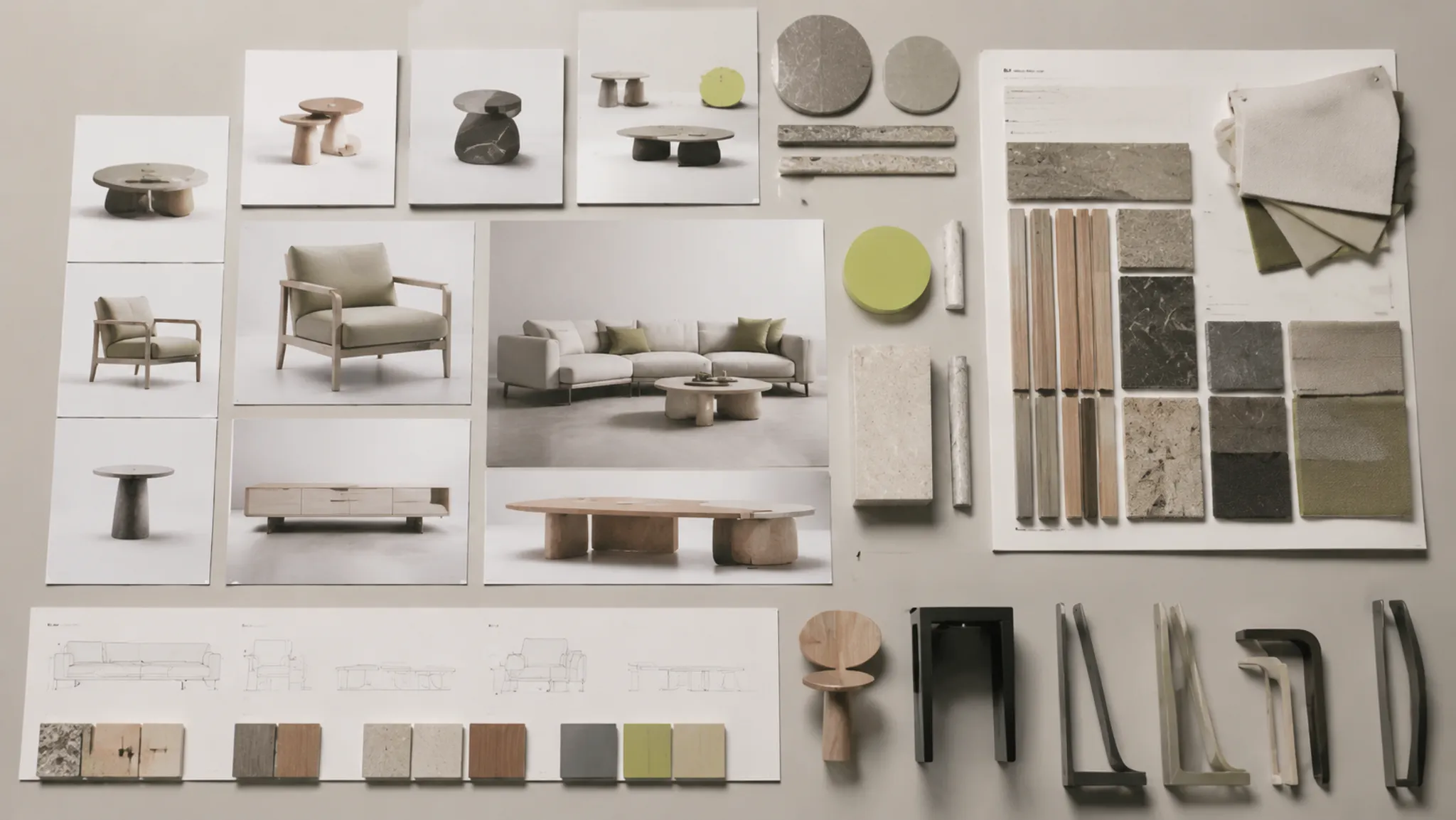
These are review criteria, not universal furniture design standards. Each collection requires its own documented selection.
If no rule exists, revise the brief first. Reviewers cannot decide whether a difference violates an unstated system.
Build a Normalized Comparison View
Perspective, camera distance, lighting, background, cropping, and object scale affect what reviewers notice. These variables can make related products appear disconnected or conceal a genuine mismatch.
Furniture research has controlled viewing angle, lighting, texture, image size, and background when comparing form or color. Those studies do not define family coherence, but they support a narrower principle: corresponding products are easier to assess when unrelated image variables remain stable.
A normalized comparison view should use:
- The same camera orientation for corresponding products
- Comparable framing and object scale
- A stable background and ground plane
- Consistent lighting direction and intensity
- Matching crop boundaries
- The same finish treatment when form is under review
- The same form when finish variation is under review
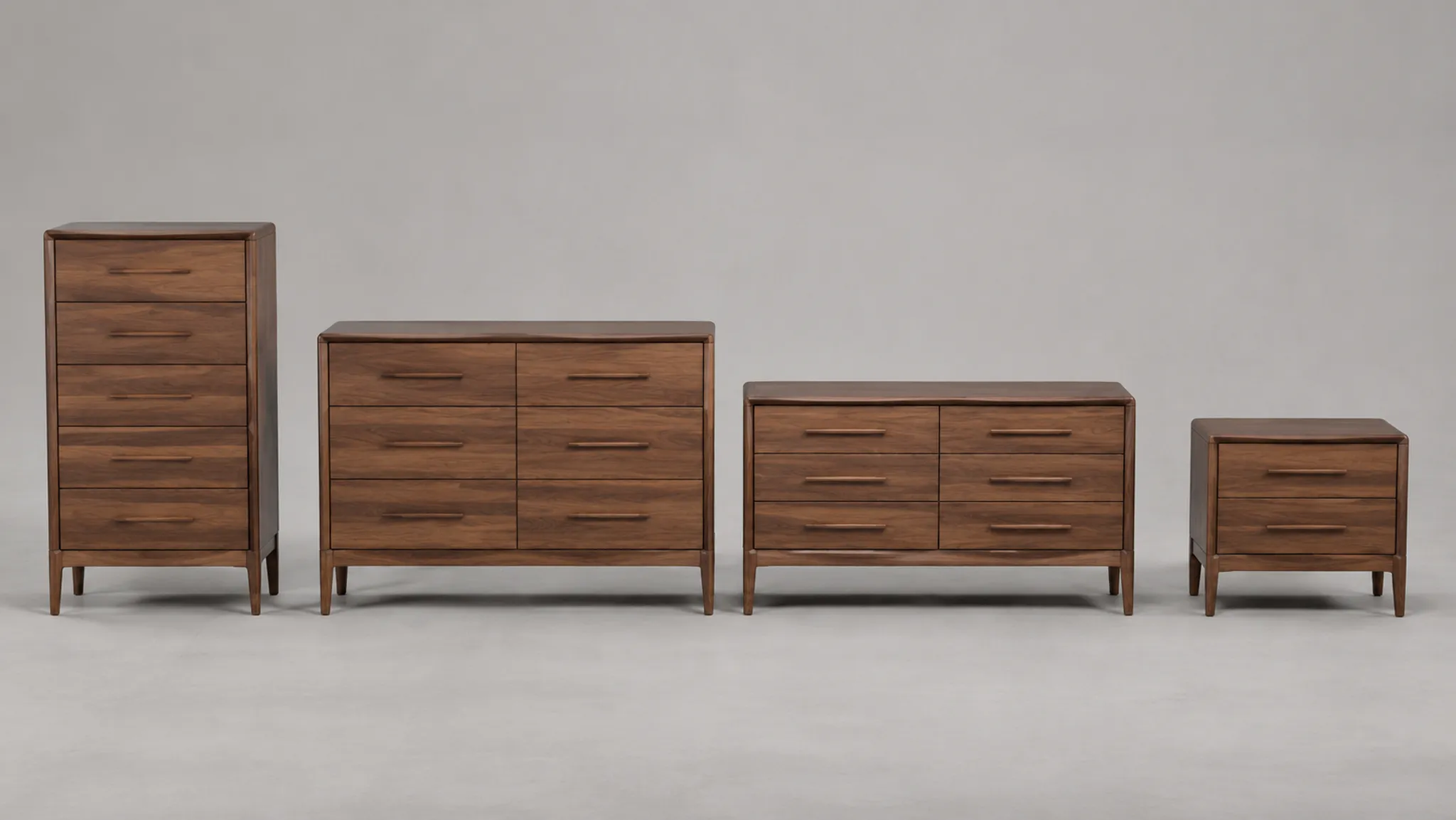
One board should answer one question. If form, color, material, setting, and camera angle all change together, the source of a mismatch remains unresolved.
Room-context views serve a later checkpoint. Use normalized views to isolate collection relationships, then room scenes to examine perceived scale, visual weight, and surrounding objects.
Compare the Family in Layers
Move from broad visual structure to smaller component and finish decisions. This order prevents a minor surface difference from distracting reviewers from a larger proportion conflict.

Form and Silhouette
Begin with the outer contour. Compare stance, enclosure, curvature, negative space, and the balance between solid and open areas.
- Do the products use related geometric or curved form language?
- Are the dominant horizontal and vertical movements connected?
- Does one product introduce an isolated contour?
- Does the outlier repeat any recognizable family feature?
A difference is not automatically a fault. A floor lamp and table lamp may require different silhouettes, just as a dining table cannot repeat a chair outline literally. The decision rests on whether their forms share a named organizing principle.
If that principle cannot be stated, mark the relationship as unresolved. Do not invent a rationale after seeing the images.
Proportion and Visual Weight
Compare relationships within each object and across the collection. Useful observations include support thickness, top-to-base ratio, shade-to-stem ratio, seat-to-back relationship, and visual mass near the floor.
Compare ratios before absolute size. Products with different functions may remain related through proportion even when their dimensions differ substantially.
- A much heavier base on one variant
- A thinner frame without a corresponding change elsewhere
- A shade that dominates one fixture but recedes on another
- A cabinet front divided at a different visual rhythm
- A support-to-surface relationship found nowhere else in the family
The render shows perceived proportion, not confirmed dimensions. When the decision depends on thickness, clearance, or alignment, request dimensioned product data and refer technical implications to the appropriate participant.
Component Placement
Handles, legs, stretchers, shades, diffusers, switches, seams, arms, and shelf divisions can carry family identity across different product types.
- Is the component aligned to a shared datum?
- Does its offset repeat across products?
- Are junctions exposed, recessed, or concealed consistently?
- Does placement create a comparable visual rhythm?
- Has the component moved for a documented functional reason?
Component correspondence can make a varied family readable. It can also reveal an inconsistency that a shared finish was concealing.
Visible placement does not confirm shared parts or construction. Check variant data, dimensions, and bills of materials when those relationships affect development.
Scale Cues and Contact Points
Architecture, adjacent objects, familiar hardware, seat-height relationships, and human context can suggest scale. Apply those cues consistently across the image set.
A low camera position may make one chair appear heavier. An empty background may make a compact lamp look larger than a furnished room view suggests.
Compare how legs meet the floor, shades meet stems, tabletops meet supports, and upholstered volumes meet exposed frames. A changed contact point may be intentional, but it should connect to the family rule or a documented category requirement.
If room scenes conflict with normalized views, record the conflict and request a corrected comparison. Do not select whichever image feels more persuasive.
Material and Surface Language
A render can suggest grain, weave, roughness, translucency, sheen, and edge response. These cues support a comparison of surface direction, but they do not confirm physical composition or final appearance.
Control lighting and exposure before judging a finish variant. Warmer light, stronger reflections, or a different environment can make the same intended finish appear unrelated.
- Does grain direction follow the same logic?
- Does metal sheen shift without explanation?
- Does glass or polymer translucency remain comparable?
- Does textile scale change between related products?
- Do edge highlights suggest a different radius or finish build?
- Does color variation remain within the approved direction?
When appearance affects approval, compare the view with an approved finish reference and request a material sample. A rendered finish is a visual target, not an exact reproduction.
Is a Collection Outlier Intentional or Inconsistent?
An intentional collection outlier needs more than a plausible explanation. Its role, continuity points, and exception status must appear in the working record.
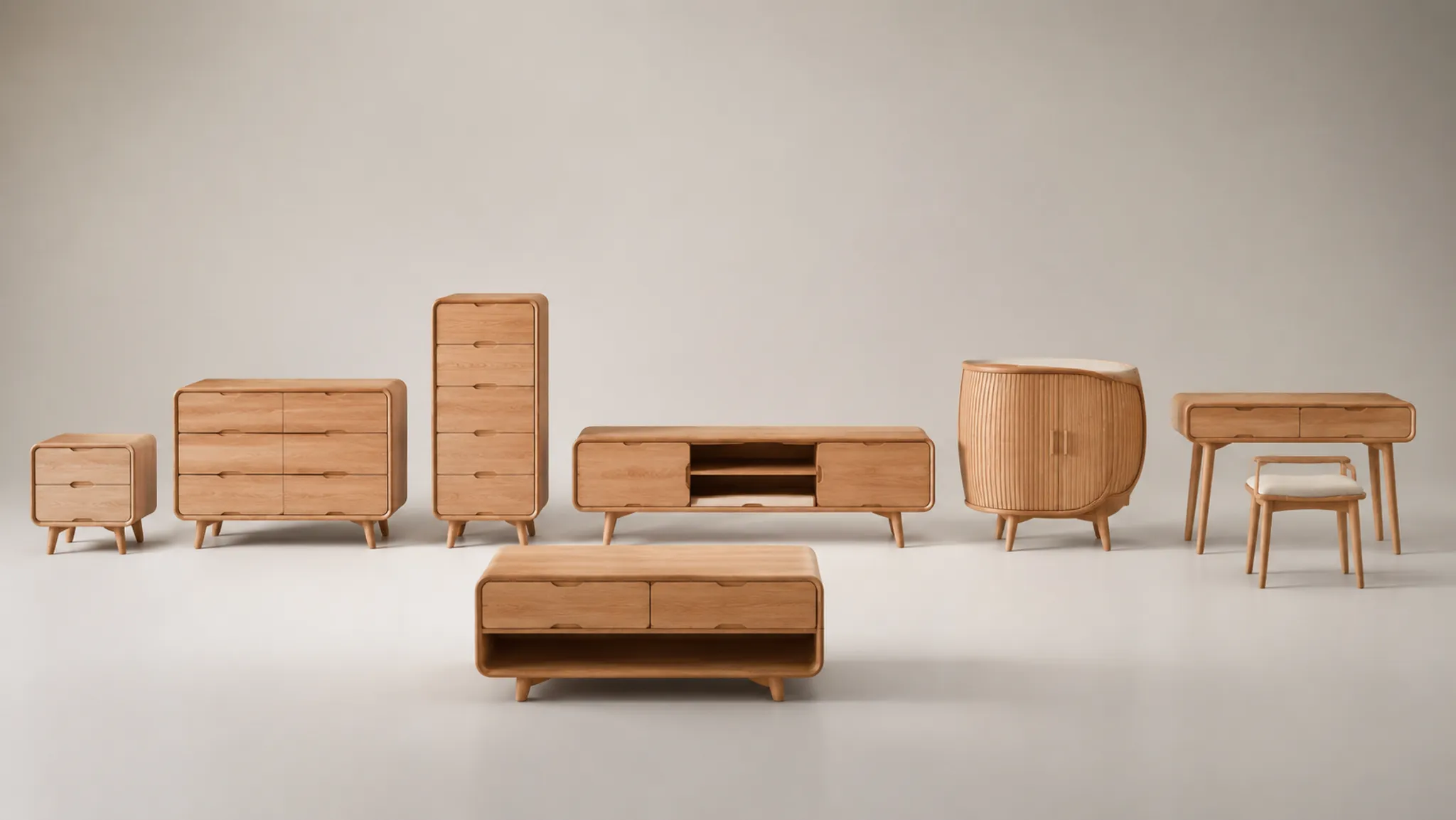
1. Does the Outlier Have a Defined Role?
The brief should explain why the product differs. The reason might involve category, placement, function, scale tier, merchandising role, or a deliberately contrasting focal position.
A request to make one object different is too broad. Name which attributes may depart from the family and which must remain continuous.
2. Does It Retain Continuity Points?
An outlier may depart in silhouette while retaining component geometry, edge response, finish logic, or proportion. It may change material while preserving form and placement.
List those continuity points directly. If reviewers can describe only the difference, the family relationship remains weakly specified.
3. Is the Difference Controlled?
A controlled difference remains consistent across the required views and records. Its geometry should not shift between the collection board, elevation, presentation render, and room context without explanation.
Define the exception's boundary as well. If one product receives a new leg profile, the approval note should state whether it is exclusive, category-specific, or intended for later variants.
4. Is the Decision Recorded?
The collection approval record should identify the reviewed version, accepted exception, continuity criteria, unresolved questions, and responsible next participant.
A rationale created after review does not demonstrate prior intent. It may become a valid new direction, but the record should identify it as a revision.
An inconsistent outlier usually fails one or more tests. It lacks a defined role, retains too few continuity points, changes across views, conflicts with the family rule, or has no approval record.
Use an Outlier Decision Matrix
| Review condition | Working classification | Next action |
|---|---|---|
| The difference is specified, continuity points are visible, and the exception is recorded | Intentional and controlled | Approve the visual direction, subject to separate technical checks |
| The difference is specified, but continuity points are weak | Intentional but disconnected | Revise the brief or strengthen family cues |
| The difference appears coherent but has no documented role | Plausible but unexplained | Request a role statement and approval note |
| The difference changes between views | Uncontrolled | Normalize the views and correct the image set |
| The decision depends on dimensions, components, or construction absent from the render | Unverified | Request product data and specialist confirmation |
| The difference conflicts with the stated family rule | Inconsistent | Revise the product direction or formally revise the rule |
These classifications describe review status, not technical conclusions. Each one identifies the evidence or revision needed next.
Translate Visual Symptoms Into Actions
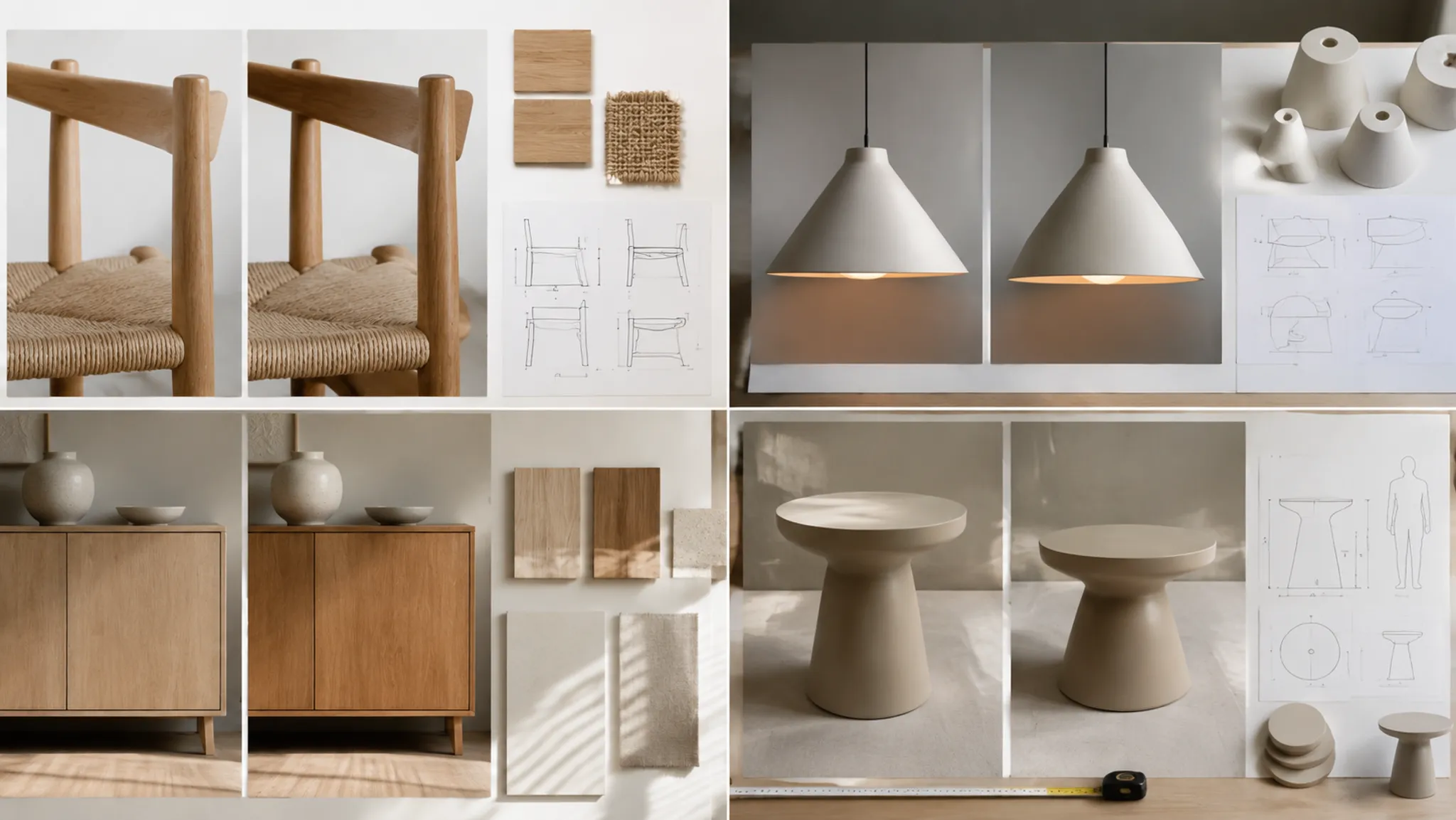
Example: One Chair Has Thicker Legs
The normalized views show that one chair has visibly heavier supports. The brief does not identify a category-specific exception.
Request a matched form comparison and dimension confirmation. Record whether the supports are corrected, accepted as a category rule, or referred for technical development.
Example: A Pendant Introduces a New Shade Geometry
The pendant uses a faceted shade while the other fixtures have continuous curved profiles. Its stem connection and finish remain consistent with the family.
Ask whether the faceted geometry defines a deliberate focal variant. If accepted, record its continuity points and the limits of the exception. Electrical, thermal, suspension, and installation questions require separate review.
Example: A Cabinet Finish Appears Disconnected
One cabinet appears redder and glossier than the approved collection board. Its image also uses warmer lighting and stronger reflections.
Commission a controlled finish comparison before changing the design. Compare identical geometry under matched lighting, then request a physical sample when the finish decision affects production.
Example: A Side Table Looks Too Small
The room render suggests a smaller scale, but the camera position and surrounding furniture differ from the other views. The image does not establish whether the dimensions changed.
Request a normalized comparison and dimension record. Use the room scene as context only after the scale cues are aligned.
Record Decisions, Not Impressions
Comments such as “does not feel related” are difficult to resolve. A useful review note identifies the visible symptom, governing criterion, evidence checked, and required action.
| Field | What to record |
|---|---|
| Product and version | The exact item and image revision reviewed |
| Criterion | Form, proportion, silhouette, placement, scale cue, material, or finish |
| Observation | What the comparison visibly shows |
| Family rule | The relevant brief statement or approved reference |
| Status | Consistent, intentional exception, unresolved, or inconsistent |
| Missing evidence | View, dimension, sample, variant record, rights record, or technical input |
| Decision | Approve, revise, compare again, or hand off |
| Owner and date | Who carries the action and when the decision was made |
Research on visualized furniture regulations supports using shared visual guidance to reduce ambiguity. It does not establish a universal collection-audit standard.
Preserve disagreement when it exposes different criteria. If one reviewer is judging silhouette and another is judging finish, divide the issue into separate decisions.
Keep Visual Coherence Separate From Product-System Consistency
A visually coherent collection may contain inconsistent product data. Products may also share components or dimensions while appearing unrelated.
Research on product families with many variants examines consistency across linked data, models, and processes. For a visual audit, the practical boundary is narrower: resemblance does not verify the underlying variant system.
When a decision concerns shared components, dimensional organization, or configuration, inspect the relevant records:
- Variant definitions
- Dimensioned drawings
- Component identifiers
- Bills of materials
- Finish schedules
- Prototype or sample records
- Approved product specifications
A repeated handle shape may suggest a shared component. Only the product record can identify whether it is actually shared.
Separate Collection Approval From Technical Handoff
A collection board can support a visual-direction decision. It cannot close every development question.
Refer the issue to an appropriate qualified participant when it depends on:
- Joinery or structural behavior
- Electrical components or thermal conditions
- Material composition or performance
- Manufacturing methods and tolerances
- Installation requirements
- Applicable codes or product requirements
- Reference ownership or usage rights
- Final color and finish reproduction
- Production samples and quality controls
The approval note should state its scope precisely. “Visual family direction approved” is more useful than wording that implies completion of technical validation.
Evidence Limits in Collection Review
The available academic material supports separating criteria, controlling comparison conditions, visualizing review rules, comparing corresponding components, and checking hidden variant or dimensional data independently.
Coverage remains uneven. The sources do not supply an industry-wide definition of family coherence, a universal weighting system, or a reliable method for establishing design intent. Direct lighting-specific coverage is limited.
The source pool also lacks a primary collection brief or manufacturer archive explaining a deliberate outlier. The examples here therefore illustrate review reasoning rather than documented outcomes from a named collection.
Multi-criteria studies help explain why criteria should be separated, but their categories and weights are case-specific. Controlled furniture experiments support normalized viewing conditions; they do not predict customer acceptance, sales, manufacturability, or production results.
A Practical Family-Coherence Audit Sequence
- Identify the family rule. Record what should remain stable and what may vary.
- Define the review question. Separate form, proportion, placement, scale, material, and finish decisions.
- Normalize the comparison. Align camera, scale, crop, lighting, background, and finish conditions.
- Compare broad structure first. Examine silhouette, visual weight, and dominant proportion.
- Compare recurring components. Check positions, junctions, edge treatments, and contact points.
- Review surfaces separately. Use controlled views and an approved finish reference.
- Flag each outlier. Record the visible difference without assuming intent.
- Test role and continuity. Identify why it differs and which family cues remain.
- Check the record. Examine the brief, variant relationship, approval history, and relevant product data.
- Assign a status. Mark the item consistent, intentionally controlled, unresolved, or inconsistent.
- Issue the action. Request a revision, comparison view, sample, record, or specialist handoff.
- Preserve the decision. Update the collection approval record with its scope and unresolved dependencies.
Stop when the visible decision is reviewable and the remaining dependencies have named owners. Going further can blur visual approval with technical development.
The Review Threshold
A collection does not need uniformity. It needs a legible system of continuity and variation.
Treat an outlier as intentional when its role is defined, its continuity points can be named, its appearance remains stable across comparison views, and its exception is recorded. If any condition is missing, leave the item unresolved.
The final question is not whether reviewers can invent a reason for the difference. It is whether the brief, images, references, and approval record support the same explanation. Record the smallest responsible revision, then assign any unresolved technical question to the appropriate participant.
Sources
- Application of Comprehensive Evaluation in New-Product-Development Evaluation: The Case of Landscape-Architectural Outdoor Wooden Furnishing
- INCONSISTENCY MANAGEMENT FOR PRODUCT FAMILIES WITH MANY VARIANTS THROUGH A MODEL-BASED APPROACH IN MODULAR LIGHTWEIGHT DESIGN
- Visualization of regulations to support design and quality control--a long-term study
- Using Augmented Reality Technology to Construct a Wood Furniture Sampling Platform for Designers and Sample Makers to Narrow the Gap between Judgment and Prototype
- Integration of Multi-Criteria Decision-Making and Dimensional Entropy Minimization in Furniture Design
- Simultaneous multimodal measures for aesthetic evaluation of furniture color and form