
Comparing Diffuser Glow and Hotspots in Pendant-Light Renders
In matched pendant-light renders, broad diffuser glow reads as a wider luminous area with a smoother center-to-edge falloff. A concentrated hotspot reads as a bright center, a sharper brightness transition, or a stronger impression of the source behind the shade.
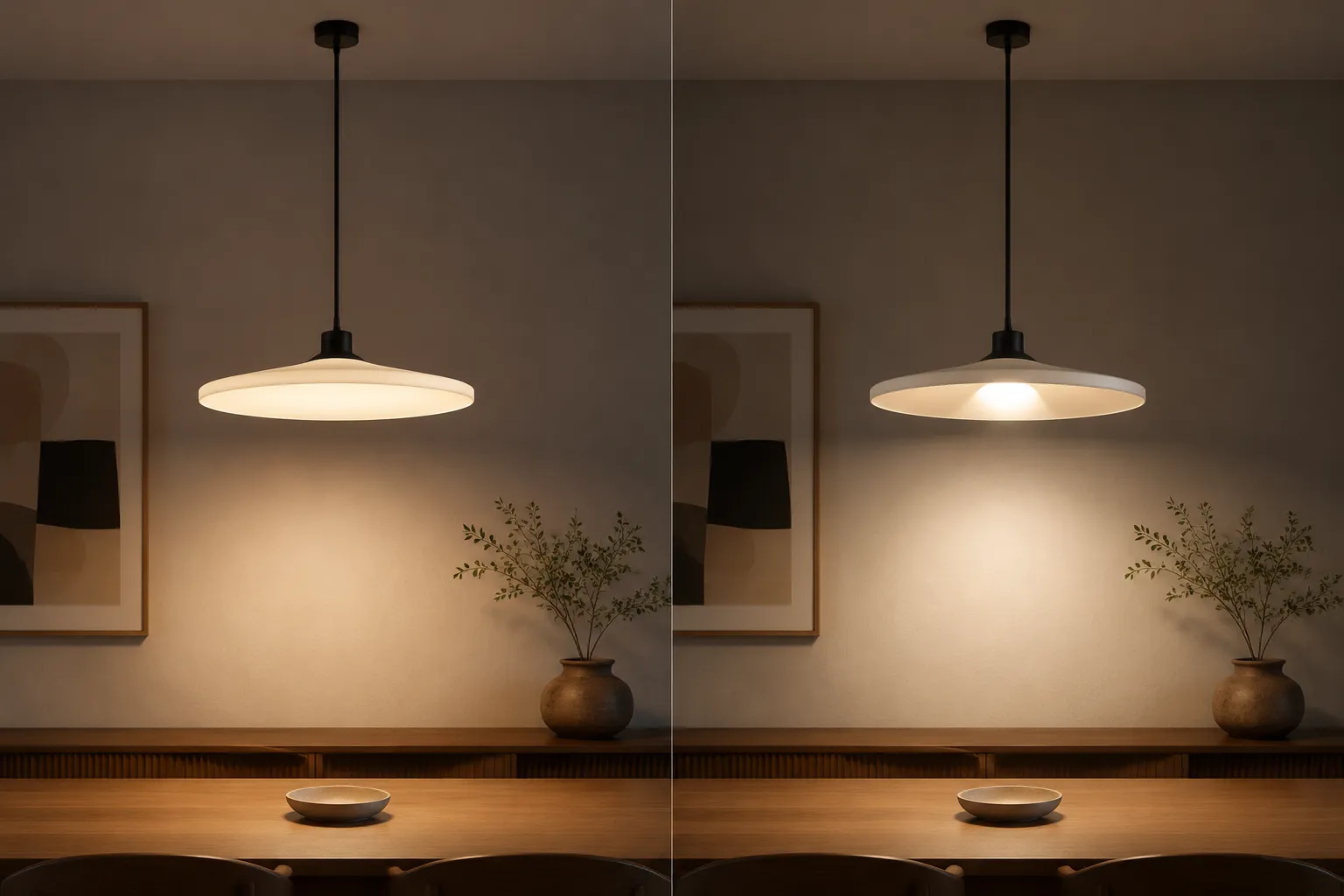
That distinction supports a visual approval decision. It does not establish diffuser construction, measured light distribution, glare behavior, electrical or thermal performance, manufacturability, installation suitability, or compliance.
What the Render Shows
Start with the visible pattern rather than an assumed physical cause. Record where the apparent brightness is concentrated and whether the glow follows the pendant's form and component placement.
- Spread: Does the luminous area extend across most of the diffuser, or remain close to the source position?
- Center-to-edge falloff: Does brightness reduce gradually, or change through an abrupt transition?
- Source visibility: Does the image suggest individual emitters, a bright internal shape, or a concentrated source behind the diffuser?
- Edge response: Do the upper, lower, and side edges maintain a coherent glow, or become noticeably darker?
- Symmetry: Does the apparent glow support the silhouette, or does one area become unexpectedly dominant?
These are useful observations for an approval note. The render alone does not identify whether the visible concentration comes from source placement, geometry, exposure, tone mapping, color management, material settings, or intended construction.
Broad Glow Compared With a Hotspot
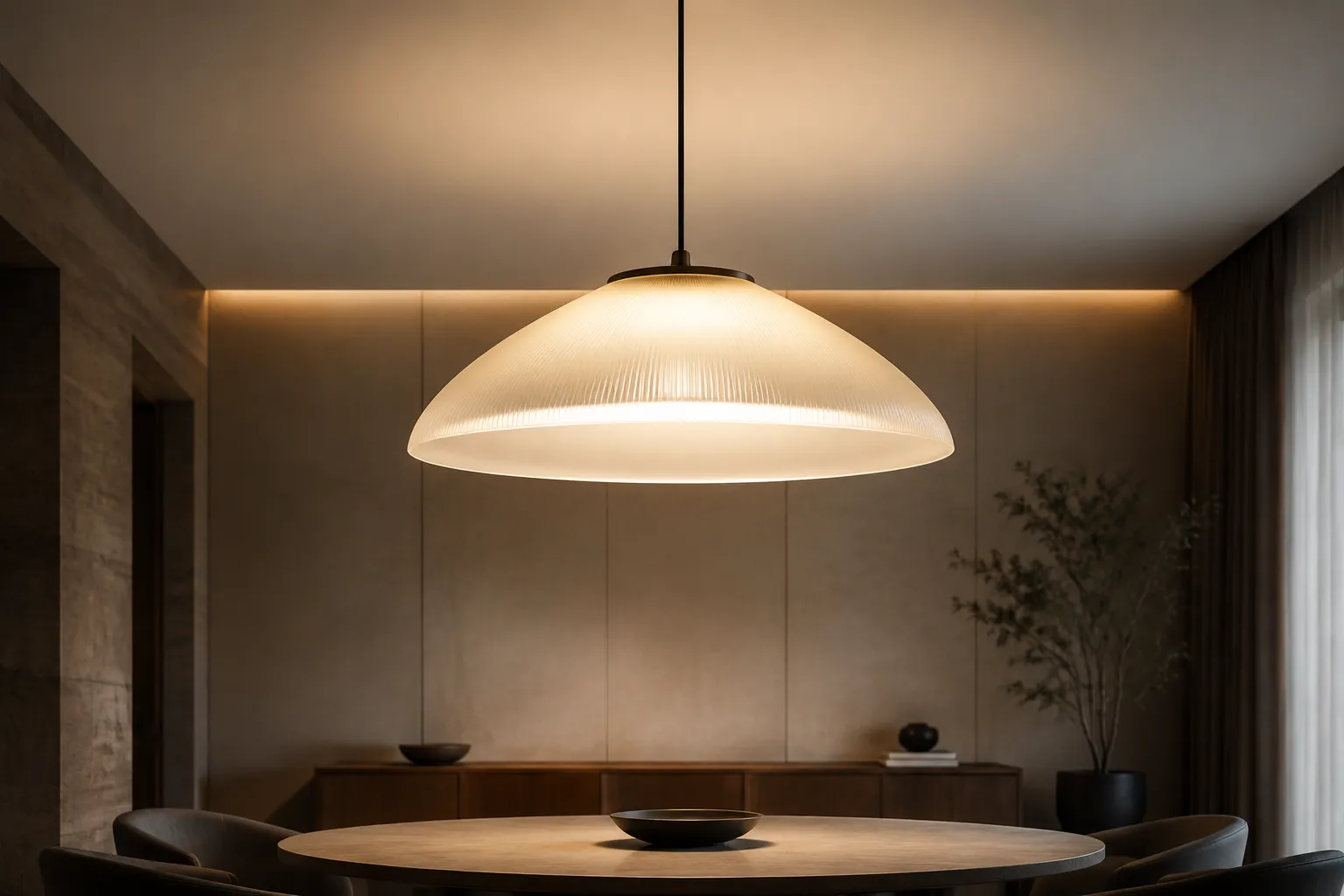
| Review criterion | Broad diffuser glow | Concentrated hotspot |
|---|---|---|
| Apparent brightness | Distributed across a larger shade area | Concentrated around a bright center or local region |
| Brightness transition | Gradual change toward the edges | Sharper change between bright and darker areas |
| Source impression | Less visually distinct behind the shade | More visible or strongly implied |
| Form reading | Supports the diffuser silhouette | Can compete with the shade's proportion or detail |
| Review implication | May better match a brief calling for broad visual spread | Requires clarification when the brief calls for controlled, broad glow |
This table describes appearance in the image. It does not rank either direction as physically better. A hotspot is an observation, not a diagnosis of a defective diffuser.
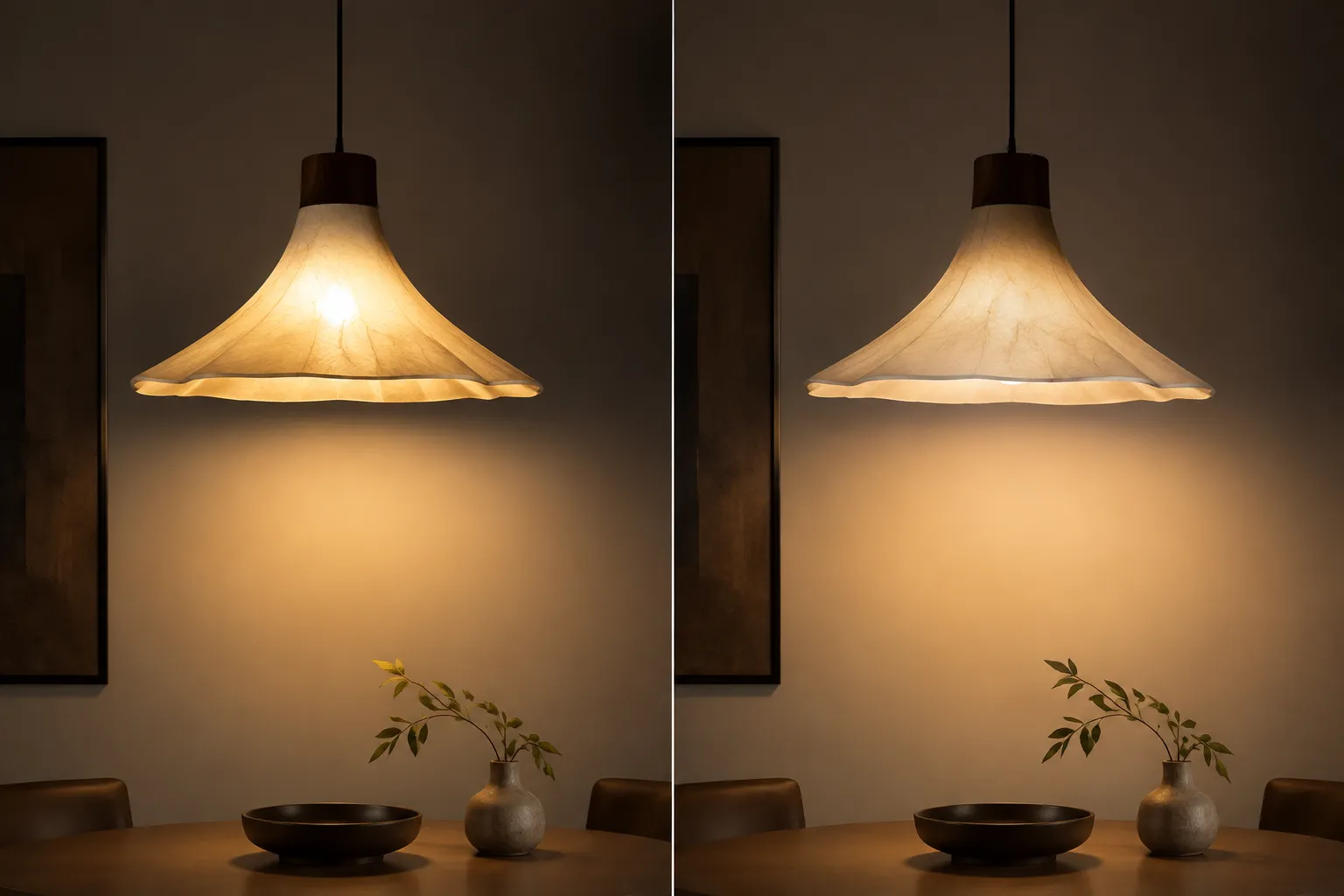
Why the Comparison Must Stay Matched
A visual comparison becomes difficult to review when each image changes several variables at once. Keep the camera, exposure, color management, pendant geometry, source placement, room context, and relevant material settings consistent wherever possible.
The revision record should identify the scene and light settings used for each image, along with any changed material or geometry inputs. Otherwise, a different render setup may be mistaken for a different diffuser direction.
Lighting evidence also has separate layers. Shade brightness in the render is an image-level observation. Luminance across the visible surface is a measured property. Luminous-intensity distribution describes emitted light by direction. These are related, but they are not interchangeable.
The CALiPER report on LED linear pendants describes how lens choice can affect emitted-light distribution and how diffuse lenses can reduce direct views of high-luminance LED point sources. That supports a mechanism boundary: the diffuser and lens matter. It does not show that a broad glow in a concept render will produce even illumination in a manufactured pendant.
How to Record the Decision
Name the preferred visual direction and preserve the unresolved questions in the same note.
Preferred direction: Render B communicates the intended broad diffuser glow more effectively. It shows a wider luminous area, smoother center-to-edge falloff, and less visible source concentration than Render A.
Revision request: Keep the brightness transition gradual near the diffuser edges while retaining the current silhouette and room scale cue.
Open confirmation: The image does not establish diffuser construction, measured light distribution, glare behavior, thermal performance, or compliance. Request the relevant material and technical records before treating those questions as resolved.
If the hotspot is preferred, document that choice with equal precision:
Preferred direction: Render A retains the intended concentrated central glow.
Open question: Confirm that the visible source impression is deliberate and consistent with the brief. The render does not establish whether the concentration comes from source placement, diffuser construction, geometry, or scene settings.
The useful record is not “looks realistic.” It is the visible criterion that supports the decision.
When the Hotspot Needs Another Review
Request another review when the bright center changes a consequential design or handoff decision. Typical triggers include:
- It conflicts with the brief's intended broad spread.
- It makes the source impression more prominent than the pendant form.
- It changes the perceived material from translucent to visibly thin or highly open.
- It creates an inconsistent appearance across a collection.
- It affects a decision about diffuser material, construction, or component placement.
- It is being used to infer glare, efficiency, illumination, or installation suitability.
Research on luminance uniformity and glare can explain why non-uniform bright sources may need closer evaluation. Those studies are not tests of the depicted pendant, and their conditions should not be transferred directly to this project.
Ask for the missing evidence that matches the physical question: a material sample, construction detail, source-placement record, photometric data, applicable test record, or qualified technical review.
Common Misreadings
“The broad glow proves the diffuser is even.”
It does not. The render shows an apparent brightness spread under selected scene conditions. Measured surface distribution and measured room distribution remain separate questions.
“The hotspot proves the diffuser is faulty.”
It does not. The image may reflect source geometry, source placement, exposure, tone mapping, color management, shader settings, or intended construction.
“Removing the hotspot solves the physical problem.”
It only changes the image unless construction and measurement records support the same conclusion. A smoother render can conceal uncertainty rather than resolve it.
“A photorealistic render is enough for production approval.”
It can support approval of visible form and light direction. Physical performance, installation suitability, and production requirements require separate records and appropriate technical review.
The Next Revision Request
Ask for a matched comparison view with the following information recorded:
- Camera position and lens
- Exposure and color-management settings
- Pendant geometry and diffuser configuration
- Source location and apparent source size
- Room context and surrounding reflectance
- Relevant material settings
- Intended glow direction in plain language
Then state the decision in observable terms:
Compare broad diffuser glow against concentrated hotspots. Preserve the direction with the preferred spread, center-to-edge falloff, edge response, and source visibility. Identify remaining inferences separately, and provide the material, construction, photometric, or technical record needed before physical performance affects approval.
That is the useful boundary for pendant light glow rendering: the image makes the visual choice reviewable, while the next discipline confirms what the image cannot establish.
Sources
- CALiPER Application Summary Report 19. LED Linear Pendants
- Blender Manual: Light Sources
- IES: Approved Methods and Standards
- Comparison of luminous intensity distributions
- Assessing glare. Part 2: Modifying Unified Glare Rating for uniform and non-uniform LED luminaires
- LED Luminaires: Many Chips—Many Photometric and Lighting Simulation Issues to Solve